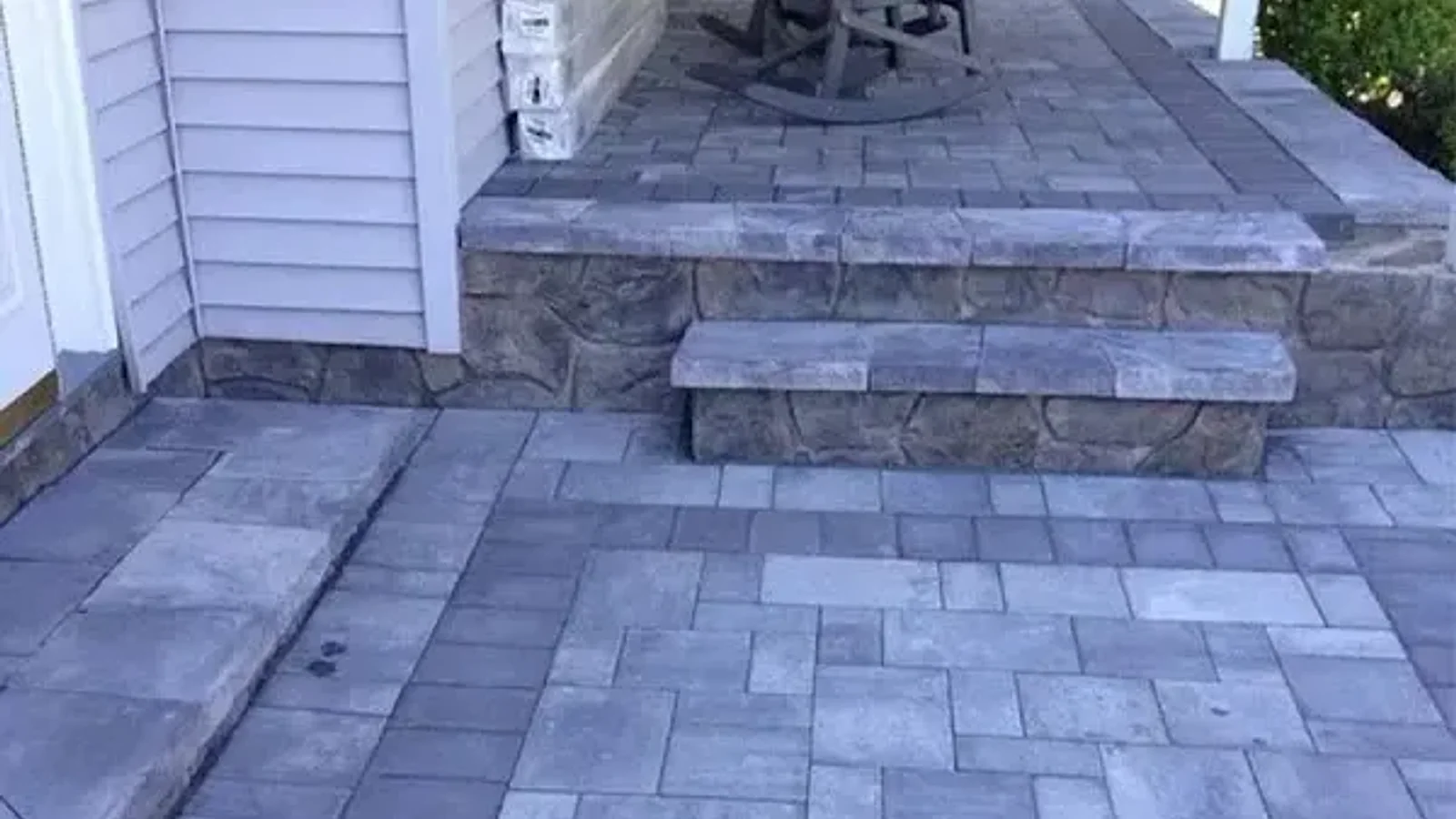
A paver patio is one of the most popular backyard upgrades, and for good reason. Pavers are strong, come in many colors and patterns, and can be lifted and reset if a section ever needs repair. But how long your patio lasts depends almost entirely on how it's built.
Plan the size and layout. Think about the furniture you want on the patio, whether you'll add a grill or fire pit, and how people will walk from the house to the yard. It's usually worth making the patio a little bigger than you first think.
Pay attention to drainage. A patio should slope gently away from your house so rainwater runs off instead of pooling or flowing toward your foundation. This is planned before the first paver is laid.
The base is everything. Most patios that sink or shift were built on a thin or poorly compacted base. A proper patio is excavated several inches deep, filled with crushed gravel in layers, and compacted with a plate compactor before a bedding layer and the pavers go down. In New York, where the ground freezes and thaws every winter, a solid base is what keeps your patio level.
Finish the edges and joints. Edge restraints keep the pavers from spreading, and polymeric sand in the joints locks them together and helps keep weeds and ants out.
Add steps where you need them. If your patio connects to a deck, a porch or a sloped yard, stone or bluestone steps make the transition safe and look great. Railings can be added for extra safety.
Ready to plan your patio? Call G & Sons Contractor Corp at (914) 386-0438 for a free estimate, and take a look at the patios and stone steps in our gallery.